
Moving to Lisbon, one errand at a time.
Retiring to the sun, moving for work or love, or already here and still doing it all in English. The move is a run of errands, and each one goes better in Portuguese: the NIF, the bank, the viewing, the lease, the health centre. This path takes them in the order they come, then gets you to know the street.
Made for
- Retiring to Portugal, or thinking seriously about it
- Moving for work, for love, or for the light
- Already here, and tired of answering in English
Moving here · Mudar-me
In the order it happens to you.
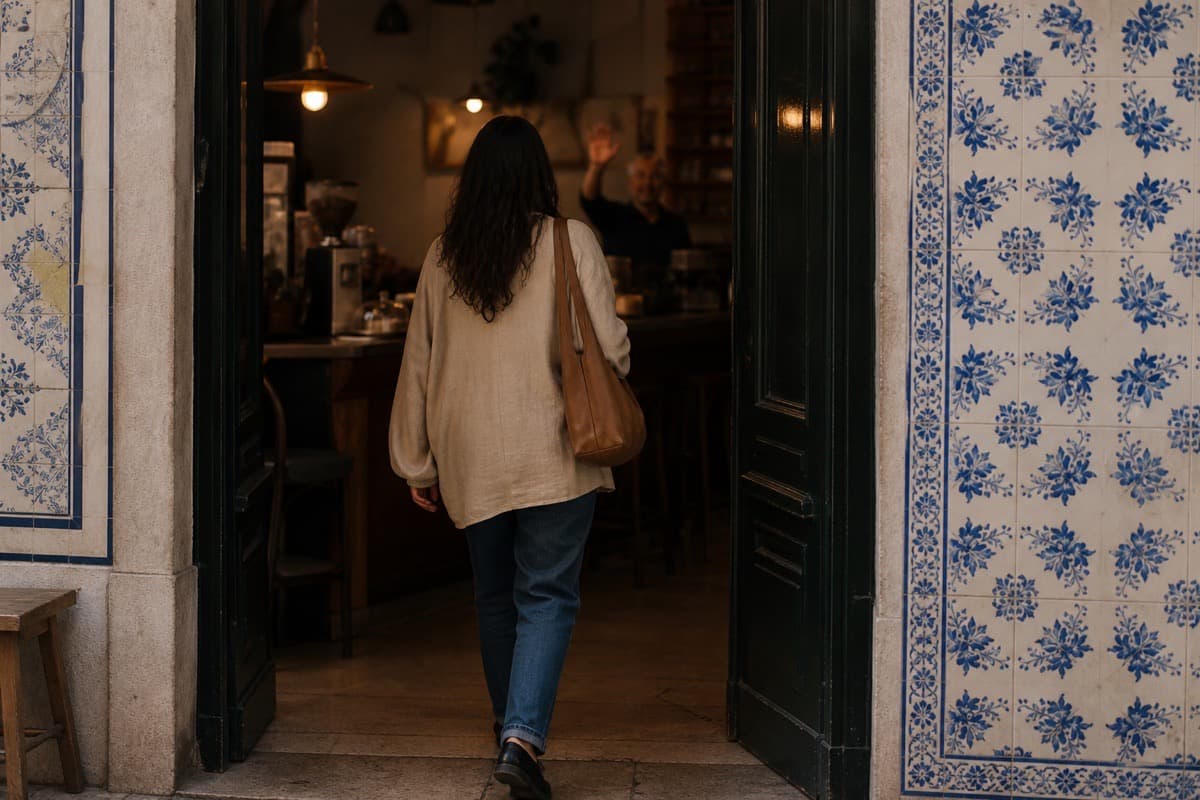
Unit 1 · 5 rooms
Basics · O básico
- Say hello, thank you and goodbye
- Count to twenty
- Say who you are
Hello, goodbye, thank you · Count to twenty · When you don’t understand · Who you are · Hack: -TION → -ÇÃO
Olá.
Hello.
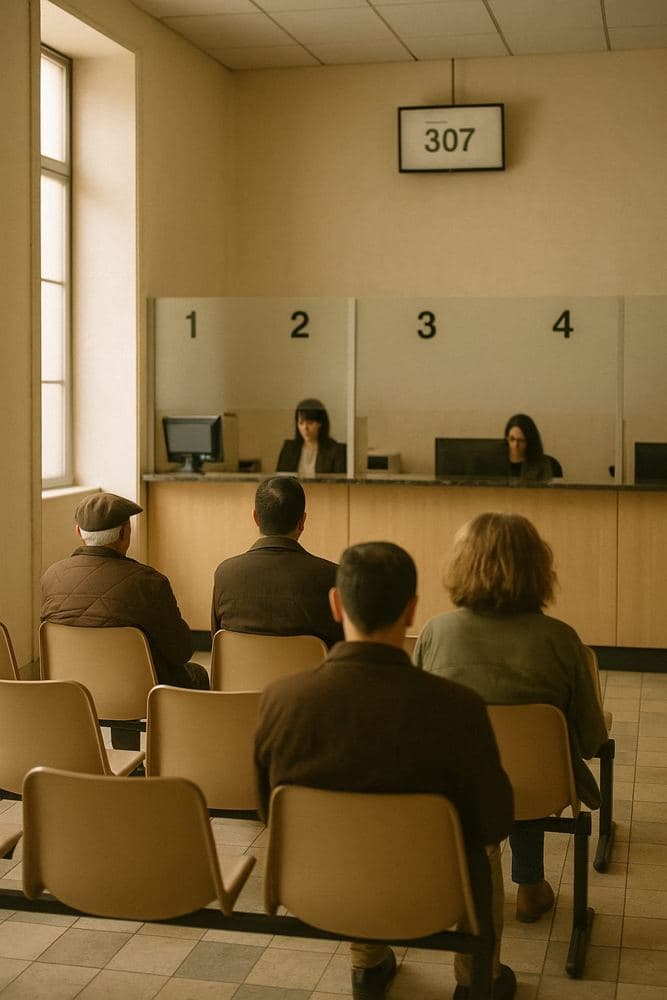
Unit 2 · 6 rooms
The paperwork · Os papéis
- Get your NIF, the number everything needs
- Open a bank account and get a Portuguese number
- Survive the Loja do Cidadão and the Junta
Getting your NIF · A phone number that is yours · Opening a bank account · The Loja do Cidadão · The Junta de Freguesia · Bluff: BUY TIME
Bom dia. Preciso de um número de contribuinte.
Good morning. I need a tax number.
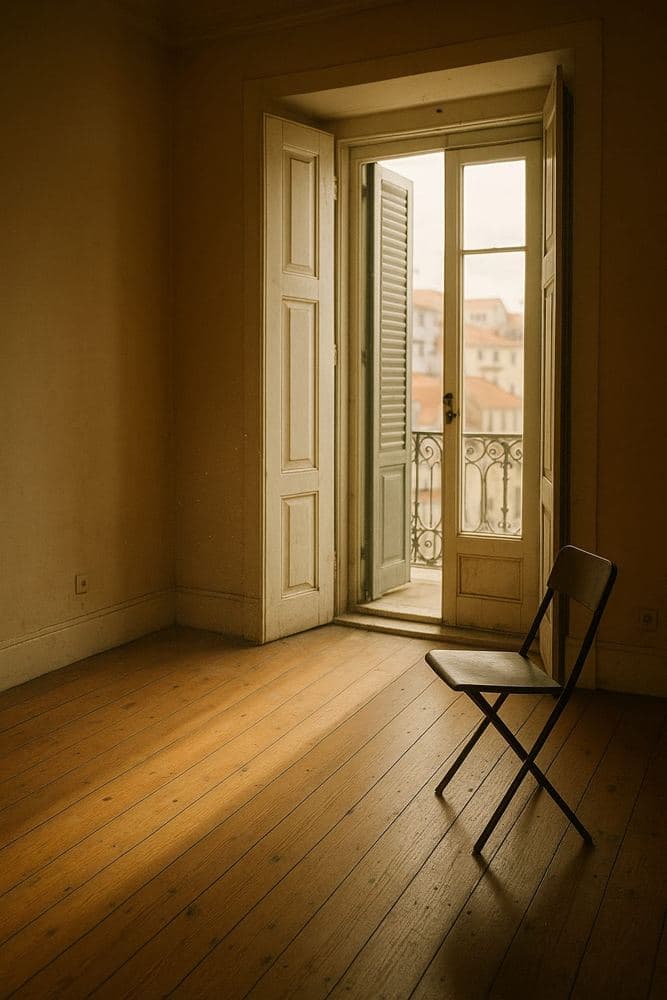
Unit 3 · 6 rooms
A place to live · Uma casa
- View a flat and ask the right questions
- Read the lease before you sign it
- Get the power on and meet the neighbour
Seeing a flat · Signing the lease · Getting the power on · The neighbour on the stairs · The parcel you missed · Idiom: Bob's your uncle
Boa tarde. Venho ver o apartamento.
Good afternoon. I am here to see the flat.

Unit 4 · 8 rooms
Everyday life · O dia a dia
- The café, the bakery and becoming a regular
- The butcher, the supermarket, the cash machine
- The launderette
A coffee, standing up · The bread queue · Becoming a regular · The counter, by weight · At the supermarket till · Cash, and the card that did not work · The launderette · Song: Hungry Like the Wolf
Um café, por favor.
An espresso, please.
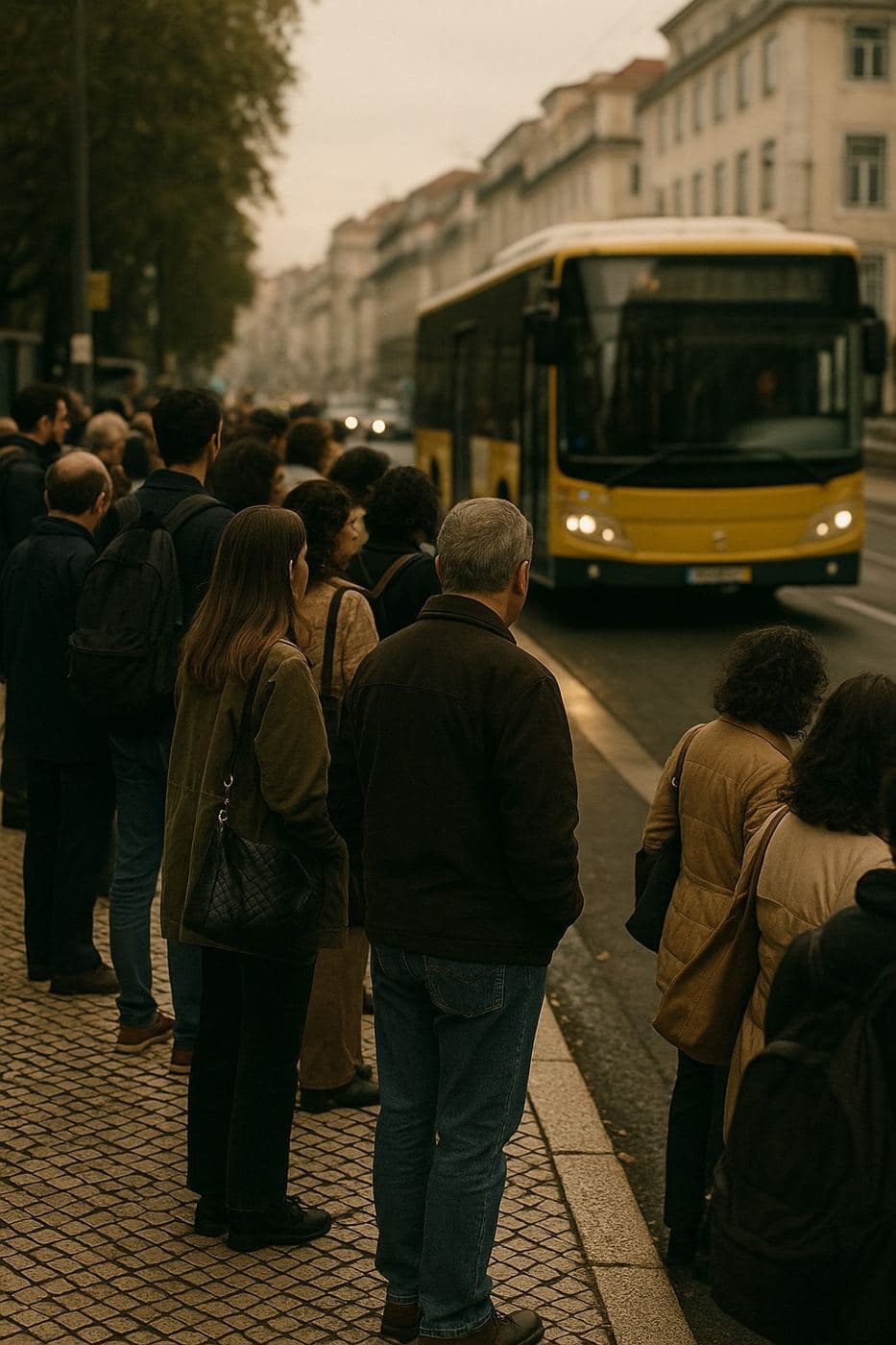
Unit 5 · 7 rooms
Getting about · Andar por aí
- Get a Navegante pass
- Trams, trains and taxis
- Buy a car without being had
The Navegante card · Getting on the 28 · Asking the way, and surviving the answer · The train to Sintra · Getting in a taxi · Buying a car · Idiom: Hold your horses
Boa tarde. Queria um passe Navegante.
Good afternoon. I would like a Navegante pass.
Unit 6 · 6 rooms
Health & family · Saúde e família
- Register at the health centre
- Get a place at school
- The pharmacy, allergies, and an emergency
Registering at the health centre · The pharmacy · Getting a place at school · What you cannot eat · When something is badly wrong · Bluff: REACT
Bom dia. Queria inscrever-me no centro de saúde.
Good morning. I would like to register at the health centre.
Unit 7 · 8 rooms
Becoming local · Ser daqui
- Portuguese classes, a gym, a haircut
- Get something mended
- A table, a tasca, a night of fado
Signing up for classes · Joining a gym for three months · A haircut · Getting something mended · A table for two · A tasca with no menu · A fado house · Chat-up: can I get you a drink?
Boa tarde. Queria inscrever-me nas aulas de português.
Good afternoon. I would like to sign up for the Portuguese classes.
Questions
Before you start
Is European Portuguese different from Brazilian Portuguese?
Yes. They are written almost the same but sound very different. Lisbon swallows its unstressed vowels, says tu among friends where Brazil says você, and has its own everyday words: telemóvel, not celular; pequeno-almoço, not café da manhã; autocarro, not ônibus; comboio, not trem. Most big apps teach Brazilian Portuguese. DUB teaches only the European Portuguese spoken in Lisbon.
Am I too old to learn Portuguese?
No. You do not need grammar tables to order lunch, chat to the woman at the market stall or thank your neighbour. You need the right sentences, heard and said out loud until they come easily. DUB works that way: one real situation at a time, every line with a voice you can replay, at your own pace. It counts the times you were understood, not a streak.
What Portuguese do I need to move to or retire in Portugal?
Start with the errands that come first: the NIF (your tax number), opening a bank account, viewing a flat and signing a lease, the utilities, the Loja do Cidadão and the Junta de Freguesia, and registering at the health centre. DUB’s moving path teaches those in that order, then the neighbours and becoming local. Nobody expects fluency; people notice when you try.
What does “obrigado” or “obrigada” mean, and which do I say?
Both mean thank you; it literally means “obliged”. It agrees with the person speaking, not the person being thanked: a man says obrigado, a woman says obrigada. In Lisbon you will say it dozens of times a day, and saying the right one is noticed.
How much does DUB cost?
The first day of every path is free, for good, with no card and no account. After that it is £54 (€64) a year or £7.99 (€8.99) a month, for every room in every path.
Does DUB work on iPhone and Android?
Yes. It runs in the browser on any phone, and you can add it to your home screen so it opens like an app. A native iPhone app is coming.
Or perhaps
Everything in Lisboa — places, walks, what’s on →