A season in Lisbon. A chapter of your own.
A month, a winter, the long slow trip you promised yourself. Stay long enough and the café starts your coffee as you walk in, the woman at the market keeps the good tomatoes back, the neighbour asks how you are — if you can say a few things back. This is the Portuguese of living somewhere for a while, whatever age you are starting at.
Made for
- Slow travel, a sabbatical, a winter in the light
- Going on your own and meaning to meet people
- Starting a language later in life, at your own pace
Your season · A temporada
In the order it happens to you.
Unit 1 · 5 rooms
Basics · O básico
- Say hello, thank you and goodbye
- Count to twenty
- Say who you are
Hello, goodbye, thank you · Count to twenty · When you don’t understand · Who you are · Hack: -TION → -ÇÃO
Olá.
Hello.
Unit 2 · 6 rooms
Settling in · Instalar-me
- Check in and get a local number
- Get a travel pass for the weeks ahead
- Order the coffee you will order every day
Checking in · A phone number that is yours · The Navegante card · A coffee, standing up · Becoming a regular · Bluff: BUY TIME
Boa tarde. Tenho uma reserva para duas noites.
Good afternoon. I have a reservation for two nights.
Unit 3 · 8 rooms
The daily round · A rotina
- Bread, market and the butcher’s counter
- The supermarket till and the cash machine
- The launderette and the parcel you missed
The bread queue · Buying by weight · The counter, by weight · At the supermarket till · Cash, and the card that did not work · The launderette · The parcel you missed · Idiom: Piece of cake
Bom dia. Um pão, por favor.
Good morning. One loaf, please.
Unit 4 · 6 rooms
The same faces · As mesmas caras
- Say more than boa tarde to the neighbour
- Book a haircut, join a gym, sign up for classes
- Get something mended
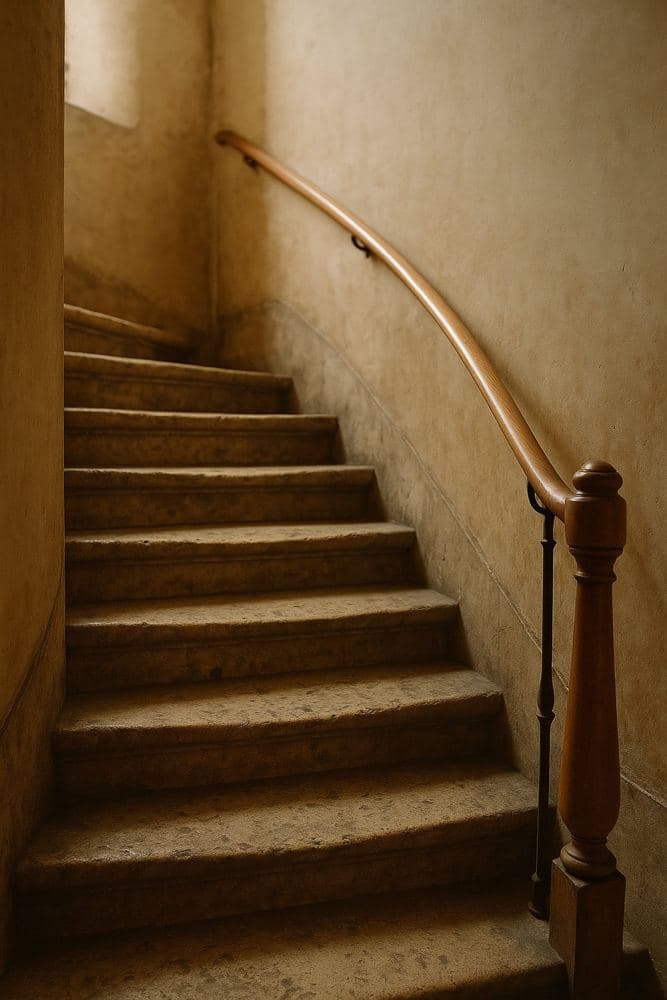
The neighbour on the stairs · A haircut · Joining a gym for three months · Signing up for classes · Getting something mended · Chat-up: can I get you a drink?
Boa tarde.
Good afternoon.
Unit 5 · 8 rooms
Out and about · Sair
- A table, a tasca, and the bill
- Trams and trains, out to the beach
- A night of fado
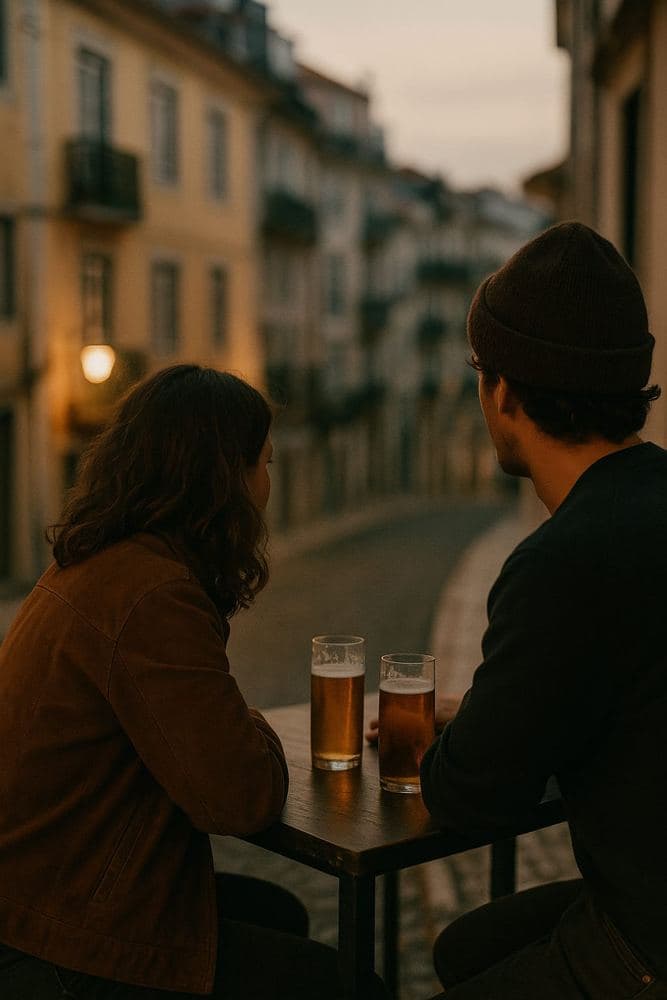
A table for two · A tasca with no menu · The bill, and the couvert · Getting on the 28 · The train to Sintra · The train to the beach · A fado house · Idiom: The penny dropped
Boa noite. Uma mesa para dois, por favor.
Good evening. A table for two, please.
Unit 6 · 6 rooms
When it goes wrong · Quando corre mal
- The pharmacy and the health centre
- Say what you cannot eat
- Call for help, report a theft
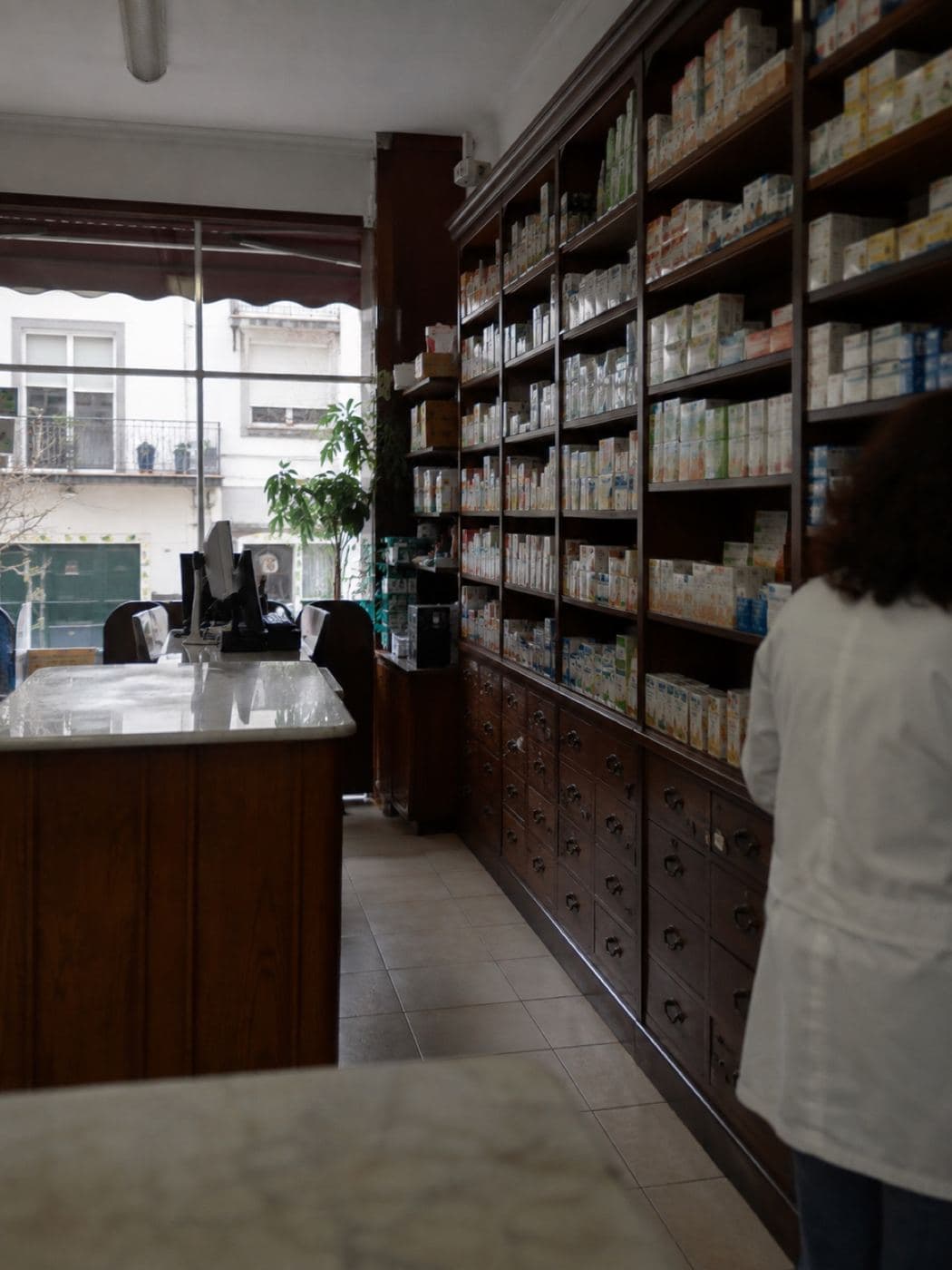
The pharmacy · Registering at the health centre · What you cannot eat · When something is badly wrong · Something has been stolen · Bluff: REACT
Boa tarde. Preciso de ajuda.
Good afternoon. I need some help.
Questions
Before you start
Is European Portuguese different from Brazilian Portuguese?
Yes. They are written almost the same but sound very different. Lisbon swallows its unstressed vowels, says tu among friends where Brazil says você, and has its own everyday words: telemóvel, not celular; pequeno-almoço, not café da manhã; autocarro, not ônibus; comboio, not trem. Most big apps teach Brazilian Portuguese. DUB teaches only the European Portuguese spoken in Lisbon.
Am I too old to learn Portuguese?
No. You do not need grammar tables to order lunch, chat to the woman at the market stall or thank your neighbour. You need the right sentences, heard and said out loud until they come easily. DUB works that way: one real situation at a time, every line with a voice you can replay, at your own pace. It counts the times you were understood, not a streak.
I am going to Lisbon on my own. Will a little Portuguese help?
More than in any other kind of trip. On your own you talk to more people, not fewer: the café owner, the person at the next table, the stallholder, the neighbour. DUB’s Lisbon includes places checked by locals, each with the line to say as you walk in, and language walks through one neighbourhood at a time. A little Portuguese is how strangers become regulars.
How do I learn Portuguese for a month or a season in Lisbon?
Learn the daily round rather than the sights: the usual at the café, the market and the butcher, the laundry and the haircut, the neighbour on the stairs, a class to join, going out, and what to say on a bad day. That is DUB’s season path. It is the Portuguese of living somewhere for a while, not passing through.
What does “obrigado” or “obrigada” mean, and which do I say?
Both mean thank you; it literally means “obliged”. It agrees with the person speaking, not the person being thanked: a man says obrigado, a woman says obrigada. In Lisbon you will say it dozens of times a day, and saying the right one is noticed.
How much does DUB cost?
The first day of every path is free, for good, with no card and no account. After that it is £54 (€64) a year or £7.99 (€8.99) a month, for every room in every path.
Does DUB work on iPhone and Android?
Yes. It runs in the browser on any phone, and you can add it to your home screen so it opens like an app. A native iPhone app is coming.
Or perhaps
Everything in Lisboa — places, walks, what’s on →