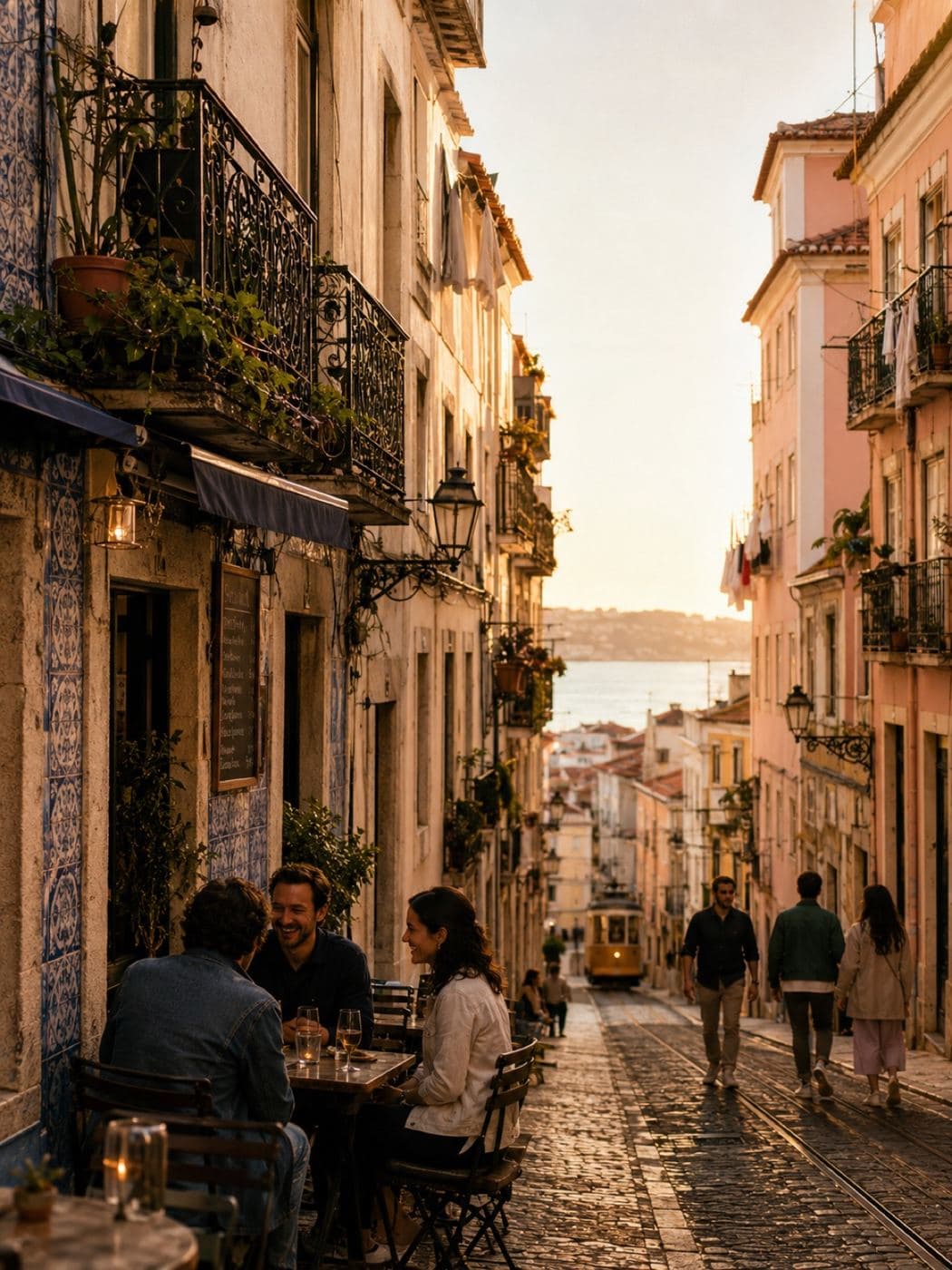
A trip to Lisbon, in the Portuguese they actually speak.
A long weekend, a city break, a fortnight in the sun. Not a course: the sentences the trip will ask of you, in the order it asks — from passport control to the last pastel de nata — each with a native voice to copy.
Made for
- A long weekend, a city break or a fortnight
- Travelling on your own, as a couple or with friends
- You would rather say bom dia than point
Your trip · A viagem
In the order it happens to you.
Unit 1 · 5 rooms
Basics · O básico
- Say hello, thank you and goodbye
- Count to twenty
- Say who you are
Hello, goodbye, thank you · Count to twenty · When you don’t understand · Who you are · Hack: -TION → -ÇÃO
Olá.
Hello.
Unit 2 · 4 rooms
Arrive · Chegar
- Get through the airport and into town
- Check in without switching to English
- Get a SIM and a signal
Getting out of the airport · Checking in · A SIM card for the trip · Bluff: BUY TIME
Desculpe, onde é o metro?
Excuse me, where is the metro?
Unit 3 · 8 rooms
Coffee & food · Comer e beber
- Order at the counter like everybody else
- Get a table, and get the bill
- Shop for the picnic
A coffee, standing up · The bread queue · A table for two · A tasca with no menu · The bill, and the couvert · Cash, and the card that did not work · At the supermarket till · Chat-up: can I get you a drink?
Um café, por favor.
An espresso, please.
Unit 4 · 6 rooms
Get about · Andar por aí
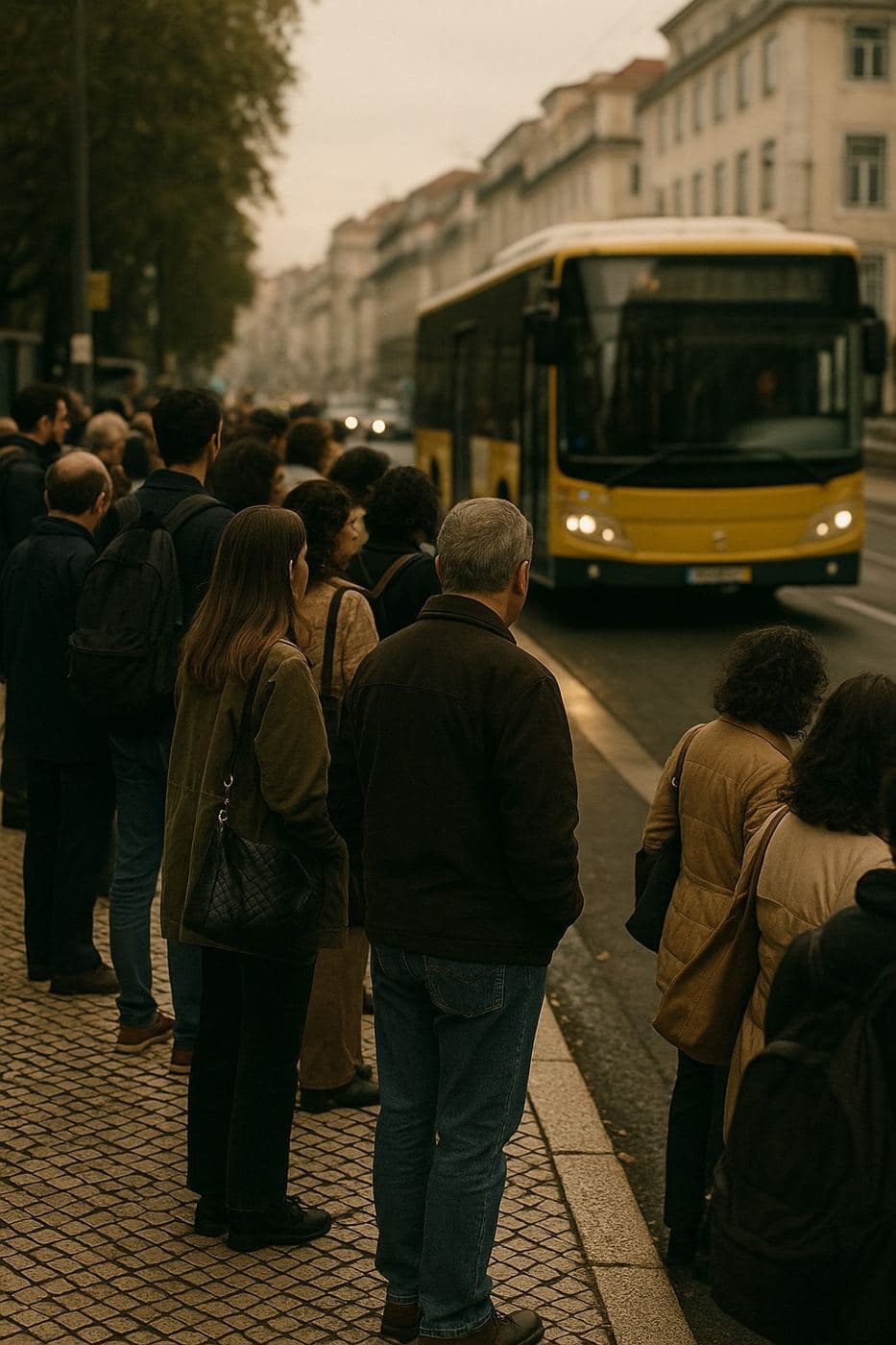
- Get on the 28 and off at the right stop
- Ask the way, and follow the answer
- Take the train out to Sintra or the beach
Getting on the 28 · Getting in a taxi · Asking the way, and surviving the answer · The train to Sintra · The train to the beach · Idiom: Hold your horses
Este vai para o Chiado?
Does this one go to Chiado?
Unit 5 · 5 rooms
See the city · Ver a cidade
- Buy tickets and pick the right queue
- Ask a stranger for the photo
- Buy at the market, and sit through fado
Tickets, and which queue · Asking somebody to take the photo · Buying by weight · A fado house · Song: Hungry Like the Wolf
Bom dia. Dois bilhetes, por favor.
Good morning. Two tickets, please.
Unit 6 · 6 rooms
When it goes wrong · Quando corre mal
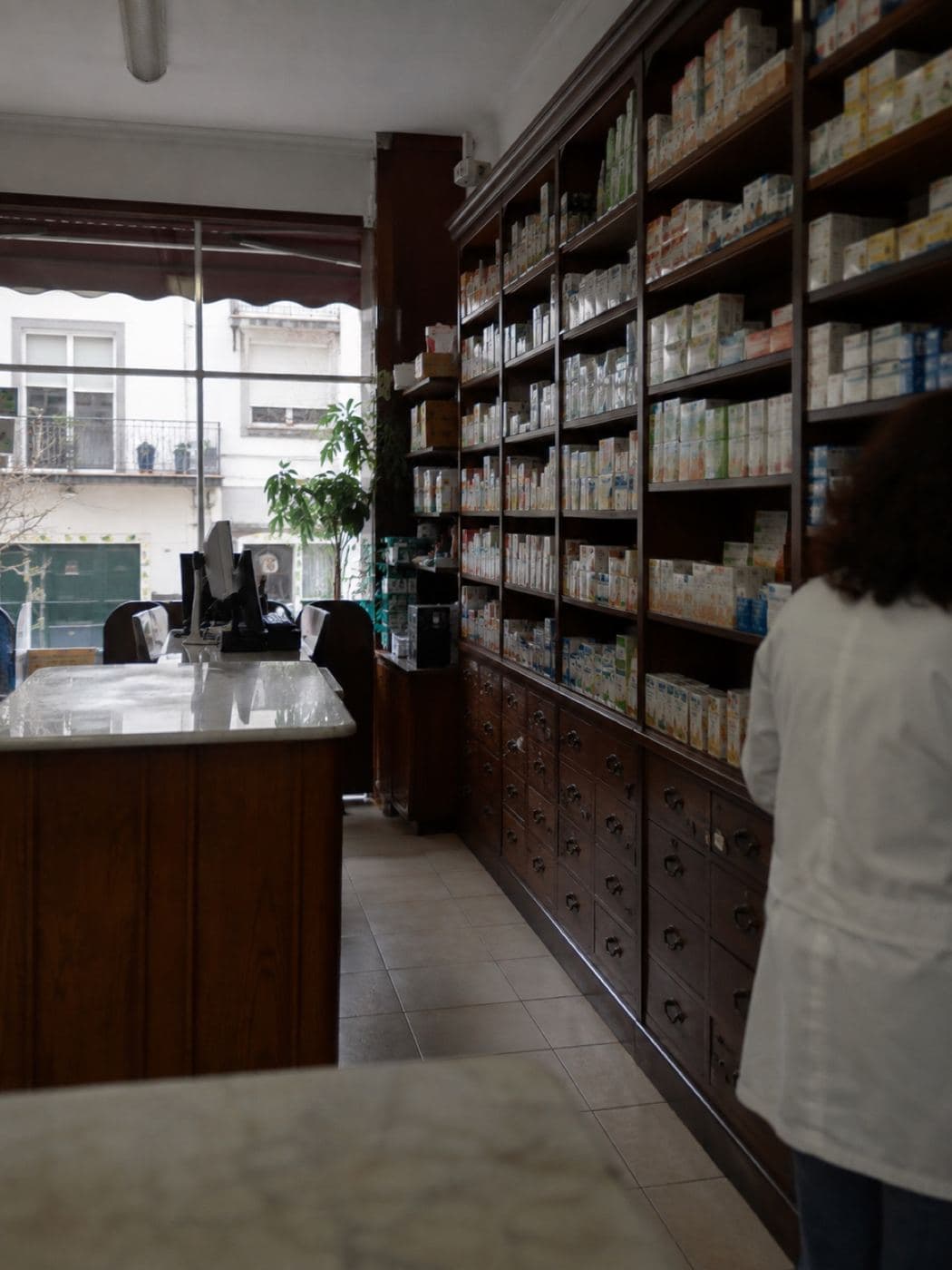
- Get help at the pharmacy
- Say what you cannot eat
- Find a toilet, call for help, report a theft
The pharmacy · What you cannot eat · Finding a toilet · When something is badly wrong · Something has been stolen · Bluff: REACT
Boa tarde. Preciso de ajuda.
Good afternoon. I need some help.
Questions
Before you start
Is European Portuguese different from Brazilian Portuguese?
Yes. They are written almost the same but sound very different. Lisbon swallows its unstressed vowels, says tu among friends where Brazil says você, and has its own everyday words: telemóvel, not celular; pequeno-almoço, not café da manhã; autocarro, not ônibus; comboio, not trem. Most big apps teach Brazilian Portuguese. DUB teaches only the European Portuguese spoken in Lisbon.
Do I need to speak Portuguese to visit Lisbon?
No. Plenty of people in central Lisbon speak good English. But a bom dia when you walk in, an obrigado or obrigada on the way out and ordering your own coffee change how you are received, and they open conversations English never would. For a trip, a few dozen sentences said in the right places are enough.
What is the best way to learn Portuguese before a trip to Lisbon?
Learn the sentences in the order the trip will need them, and say them out loud. DUB’s trip path starts at the airport and goes through coffee and food, getting about, seeing the city and what to say when something goes wrong, with a native voice on every line. Five minutes a day is how it is built.
I am going to Lisbon on my own. Will a little Portuguese help?
More than in any other kind of trip. On your own you talk to more people, not fewer: the café owner, the person at the next table, the stallholder, the neighbour. DUB’s Lisbon includes places checked by locals, each with the line to say as you walk in, and language walks through one neighbourhood at a time. A little Portuguese is how strangers become regulars.
What does “obrigado” or “obrigada” mean, and which do I say?
Both mean thank you; it literally means “obliged”. It agrees with the person speaking, not the person being thanked: a man says obrigado, a woman says obrigada. In Lisbon you will say it dozens of times a day, and saying the right one is noticed.
How much does DUB cost?
The first day of every path is free, for good, with no card and no account. After that it is £54 (€64) a year or £7.99 (€8.99) a month, for every room in every path.
Does DUB work on iPhone and Android?
Yes. It runs in the browser on any phone, and you can add it to your home screen so it opens like an app. A native iPhone app is coming.
Or perhaps
Everything in Lisboa — places, walks, what’s on →